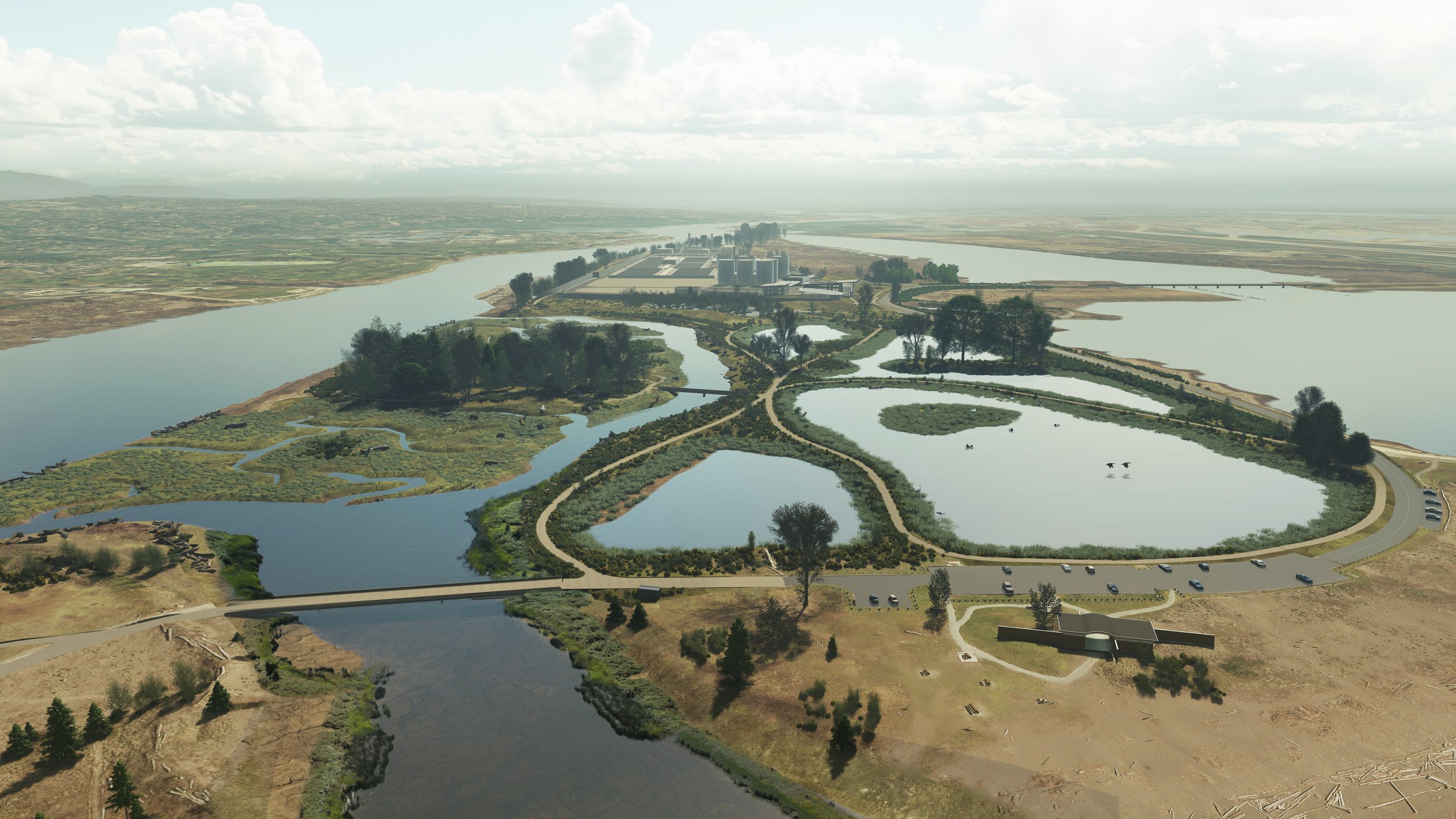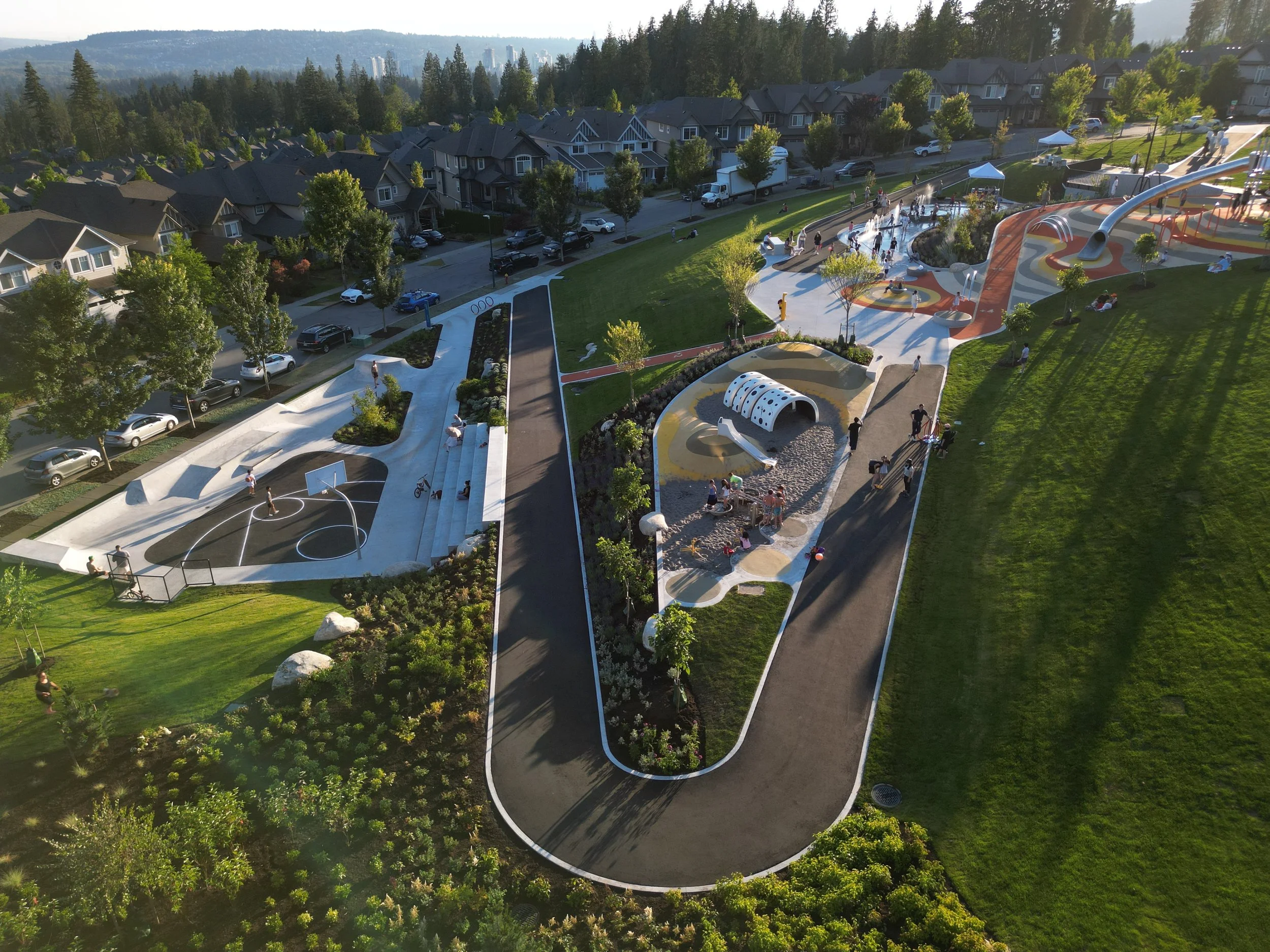
Kinsmen Park is Saskatoon’s oldest park and over the last century it has evolved into a city-wide destination. It is located on the banks of the South Saskatchewan River, and it serves as a hub of community and civic life for Saskatoon. It is a place enjoyed by children and adults alike, and a place to experience the natural environment within a distinctly urban context. Ongoing densification in the downtown core presents an opportunity to accommodate growing numbers of people and a diversity of year-round activities in the park.
The Kinsmen Park and Area Master Plan sets the framework to guide detailed design of the park over the next 25 years. Circulation systems, activities and facilities have been planned in balance with the valuable environmental qualities of the park. The Master Plan will bring new life to this historic Saskatoon park, ensuring that this valued public amenity will continue to be cherished by the community for decades to come.
Location
Saskatoon, Saskatchewan
Scope
Public Consultation, Research and Analysis, Concept Development
Status
Master Plan completed in 2011. Phase one implementation ongoing.
Recognition
2012 CSLA Regional Citation Award
Located in Vancouver’s Downtown Eastside, Oppenheimer Park has a storied past and has served numerous roles in the community throughout its 112 year history. This park has always been a place of personal and cultural expression - a place where marginalized communities have gathered with friends and neighbours to share common ground. In recent years, the facilities in Oppenheimer Park had fallen into disrepair, which had contributed to social challenges in the park and surrounding neighbourhood. The challenge for the park redesign was to create a public place that reflected the historical and cultural significance of the site, while meeting the recreational and social needs of this underserved community.
Location
Vancouver, British Columbia
Scope
Public Consultation, Research and Analysis, Concept Development, Design Documentation, Project Management, Contract Administration
Status
Completed in 2010
Recognition
2012 AIBC Lieutenant Govenor General Merit Award
2011 CSLA National Citation Award
Elsewhere
Located along the waterfront of North Vancouver, the Spirit Trail aims to integrate a series of isolated public spaces in an effort to forge social, cultural and ecological connections between communities and their surroundings. When complete, the Spirit Trail will consist of a 35 km greenway that stretches from Horseshoe Bay in West Vancouver to Deep Cove in the District of North Vancouver. This long-term phased effort involves the partnership of the City of North Vancouver, the District of North Vancouver, the District of West Vancouver, and the Squamish and Tsleil Waututh First Nations.
Prior to the design and implementation of the Spirit Trail project, the North Shore waterfront was an under-utilized stretch of land that had limited access to the water, a weak civic identity, a lack of recreational infrastructure, and rampant invasive plant species. The goal for this project was to create an integrated, multi-use trail and greenway system that restores the waterfront edge for local plant and wildlife species, is accessible and continuous, reflects the regional character, and serves as an urban amenity for a variety of users.
As the prime consultant for planning and design, space2place collaborated with the City, the District, key stakeholders, local business owners and the public in order to create a community-supported vision and set of design criteria. A series of workshops and open houses helped the design team to understand the ideas and concerns from a range of interest groups.
The integrated public process, coupled with extensive site research and analysis, will result in a flexible trail system that not only links existing parks and public spaces together, but also creates new nodes of activity and opportunities that allow trail users to enjoy the diversity of landscapes along the waterfront. The trail design demonstrates environmentally-sensitive measures such as incorporating stormwater management techniques, restoring native riparian planting and exploring new technologies for lighting. We’ve also been instrumental in addressing difficult physical connections through structural crossings such as bridges and overpasses, and we’ve helped create a comprehensive wayfinding strategy.
Location
City of North Vancouver, District of North Vancouver, and District of West Vancouver, British Columbia
Scope
Public Consultation, Research and Analysis, Concept Development, Design Documentation, Project Management, Contract Administration
Status
Master plan complete in 2008. Implementation ongoing.
Recognition
2008 Design Exchange Silver Award - Urban Design
2009 CSLA Regional Honour Award
Situated in the heart of the Simon Fraser University - UniverCity neighbourhood, the Childcare Centre fosters its community connections through an engaging street front, visual permeability, and social programming. A public park, an elementary school, and mid-rise residential buildings frame the site.
The main challenge of this project was to meet the rigorous Living Building Challenge criteria and provide an innovative amenity built with locally-sourced and non-toxic materials. In addition, our challenge was to honour the curiosity, intelligence and creativity of the children who will spend years learning and playing here, by reflecting the values of the Reggio Emilia approach to early childhood education.
Rejecting catalogue-based play equipment, we invited local daycare children to help us re-imagine play spaces and we collaborated with local artisans to develop unique play features. The site provides children with a diverse range of creative, physical and social forms of play - a space where children can create their own experiments and performances. Working creatively with the site topography, we tucked the building into the existing slope and maximized the outdoor play space by making the rooftop accessible. This strategy provides clear views for supervision and a great opportunity to integrate a slide from the roof to the sand play area below.
Location
UniverCity, Simon Fraser University, British Columbia
Scope
Public Consultation, Research and Analysis, Concept Development, Design Documentation, Project Management, Contract Administration
Status
Completed in 2012
Recognition
2013 CSLA National Citation Award
Elsewhere
Garden City Play Environment is a public place designed for children in Richmond, British Columbia. The play environment provides a diversity of experiences that foster children’s physical, emotional, social and cognitive development.
The park is an organic, flowing space where the structures and systems create a setting that celebrates the natural world and the regional character of the Pacific Northwest. By creating opportunities for children to interact with water, stone, sand, salvaged tree limbs and ribbons of perennial vegetation, children are encouraged to reconnect with the natural world, and to become long-term stewards of the environment.
Location
Richmond, British Columbia
Scope
Public Consultation, Research and Analysis, Concept Development, Design Documentation, Project Management, Contract Administration
Status
Completed in 2008
Recognition
2012 National Urban Design Award Certificate of Merit
2011 Lulu Urban Design Award - City of Richmond
2010 BCRPA Parks and Open Spaces Award
2009 CSLA National Merit Award
2008 Design Exchange - Gold Award - Landscape Architecture
The revitalization of the existing water play feature at Confederation Park presented an exciting opportunity for the City of Burnaby and Space2place - to create a new water play feature that is safe, fun, accessible, durable, and efficient to operate for years to come. The park’s existing water feature was a popular attraction for many families, but it no longer met the Fraser Health Authority safety requirements. space2place sought to design a unique, custom water play experience that still met the health, safety and maintenance criteria set out by the FHA and City Staff. We also sought to use the existing site topography to make the play environment accessible, without requiring retaining walls or guardrails.
The end result is a landscape-generated design that integrates the natural terrain of the site while connecting children to water through a rich variety of play experiences. Children chase animated jets of water, follow floating objects along channels, pump water by hand, create pools with weirs, and orchestrate the sudden release of water in rushing cascades. Elements of surprise combine with opportunities for experimentation, engaging children in extended durations of physical, social and imaginative play. The site contributes to the park year-round as a sculptural feature that evokes the movement of water and provides tiers of informal seating. The design provides a sculptural focal point and seating even when the water features are not in use.
Location
Burnaby, British Columbia
Scope
Research and Analysis, Concept Development, Design Documentation, Project Management, Contract Administration
Status
Completed in 2012
Queen Elizabeth Park is one of the oldest parks in Edmonton, where generations have come to gather together and connect with the natural world in the heart of the city. The park has a rich cultural history, home to First Nations archaeological sites, remnants of early industrial activities, and a former outdoor pool that was the first of its kind in Western Canada. As the city has expanded Queen Elizabeth Park has become less of a destination and more of a thoroughfare for walkers, cyclists and other recreational users.
The Queen Elizabeth Park Master Plan will build on the unique character and roles of the park to revitalize this cherished green space. It seeks to protect the site's natural character, improve access into and connectivity through the park, and create unique destinations areas in the park for mountain biking and enjoying contemporary public art.
Location
Edmonton, Alberta
Scope
Public Consultation, Research and Analysis, Concept Development
Status
Master plan ongoing
Elsewhere
The Metro Youth Park (often referred to as Bonsor) is located in the City of Burnaby, close to Metrotown, two Skytrain stations and an existing recreation facility. The park is a regional destination for youth across Burnaby and Metro Vancouver.
The park is unique for its time, designed with three distinct zones: a flow park for beginners, a bowl, and a “real” street plaza. Other site elements include “hangout” and viewing locations, shade structures, drinking fountains, pathways and a playground. These were designed in collaboration with local youth through a series of park design workshops.
Location:
Bonsor Park, Burnaby, British Columbia
Scope
Public Consultation, Research and Analysis, Concept Development, Design Documentation, Project Management, Contract Administration. Note: Spectrum Skatepark Creations was sub consultant for the skatepark features.
Status
Completed in 2004
Awards
Special Applications - Artistic Merit, BCRMCA Awards for Excellence in Concrete Construction, 2007
Facility Excellence, BC Recreation and Parks Association, 2006
Kelowna's downtown has struggled with the unintended consequences of urban sprawl, big box shopping malls and an overall lack of identity. Bernard Avenue lacked a bustling presence of commercial and residential activity, and was primarily dominated by vehicles, without clear routes for pedestrians.
Space2place recognized that the street redesign was a major component of the revitalization of the downtown as a whole, and sought to advocate for changes that could have a positive impact throughout the city. The goal was to come up with a forward-thinking, yet achievable vision of Bernard Avenue that responded to the desires of residents and business owners.
We were the prime consultant for the redesign of Bernard Avenue, coordinating a team of consultants including engineers, public artists, retail consulting and accessibility consulting. The conceptual design was developed in close consultation with City of Kelowna staff, the downtown BIA, local merchants, landowners and citizens.
Location
Kelowna, British Columbia
Scope
Public Consultation, Research and Analysis, Concept Development, Design Documentation, Project Management
Status
Preliminary Design Completed 2010
space2place has designed many high quality residential landscapes across the greater Vancouver area. The key to the success of our residential landscapes is based on having a thorough understanding of the existing site, carefully integrating elements to maximize the clients’ use of the property, and ensuring that the property's spatial relationships work. We seek to create a strong integration between the dwelling and the outdoor spaces, and use planting design to reinforce these relationships, while providing year round interest. Our work incorporates meticulous details, timeless materials, contemporary planting, and elegant integration with topography.
Additional photographs of our residential landscapes are available on our Pinterest page (link).
“Lunch Meet” successfully transformed a street block in Vancouver’s Gastown neighbourhood into a vibrant public lunch space for four Thursdays in July 2012. Space2place carried out the event in collaboration with the Vancouver Public Space Network, the Hastings Crossing BIA, and VIVA Vancouver.
The event involved the closure of one half of Abbott Street’s 300 block, and the set-up of a 10+ meter long lunch table and chairs. Co-workers, neighbours, and classmates came together in this rapidly changing part of the city to share food and meet new people. Food trucks, flower arrangements and a live DJ all helped create a lively summer atmosphere for this communal lunch experience.
Image of the City was part of the Tangential Vancouverism exhibition in March 2012. Through mobile photo capture and sharing, Vancouverites and visitors document their perspectives on the city every day. Massive amounts of geo-referenced data are gathered, and the data depicts a unique image of Vancouver. Through this project we have sought to explore geotagged photo data to consider how we can make the best use of this information for improving the planning and design of our city.
The Surrey City Hall playscape is located on the second level terrace of the new Surrey City Hall building, and will overlook the new civic plaza once it is built. The play space will be used by children from the City Hall childcare during the day, and available to the public during evenings and weekends.
The small space has been carefully designed to layer a diversity of play experiences. The creative and undulating terrain creates places for social activity, active play, and interactive water play. The playscape is designed to provide open-ended play experiences that will maintain children's interest upon repeated visits.
Scope
Research and Analysis, Concept Development, Design Documentation, Contract Administration
Status
Opening Fall 2013
Matsqui Trail Regional Park is a 10km-long linear park that frames the south side of the Fraser River, in Abbotsford, BC. It provides valued public access to the river’s edge for walking, horseback riding, picnicking, camping, and fishing. Increasing demands on the park and its popular boat launch prompted Metro Vancouver to develop a long-term plan to guide future development and park use.
Thus, space2place was engaged to develop concept plans for six key zones within the park to support the long-term plan. The park’s main nodes were designed to accommodate expanded programming, new lookouts, and a sensitive increase in parking. Other nodes were designed to have more defined entry experiences and new site amenities (signage, washrooms). Aspects of the park’s ecological function were proposed to be restored in key areas through new trail alignments, replacement of paths with elevated boardwalks, invasive species management, and new riparian planting to reduce bank erosion. Support for nearby agricultural production was proposed using bee hives and pollinator support plantings. The resulting plan protects and restores ecological functions, accommodates new and expanded programming, and improves the pedestrian and equestrian experience through the park.